

Discover the Gargellner Fensterweg
Where exactly are we walking? An exciting hike with views both deep and far
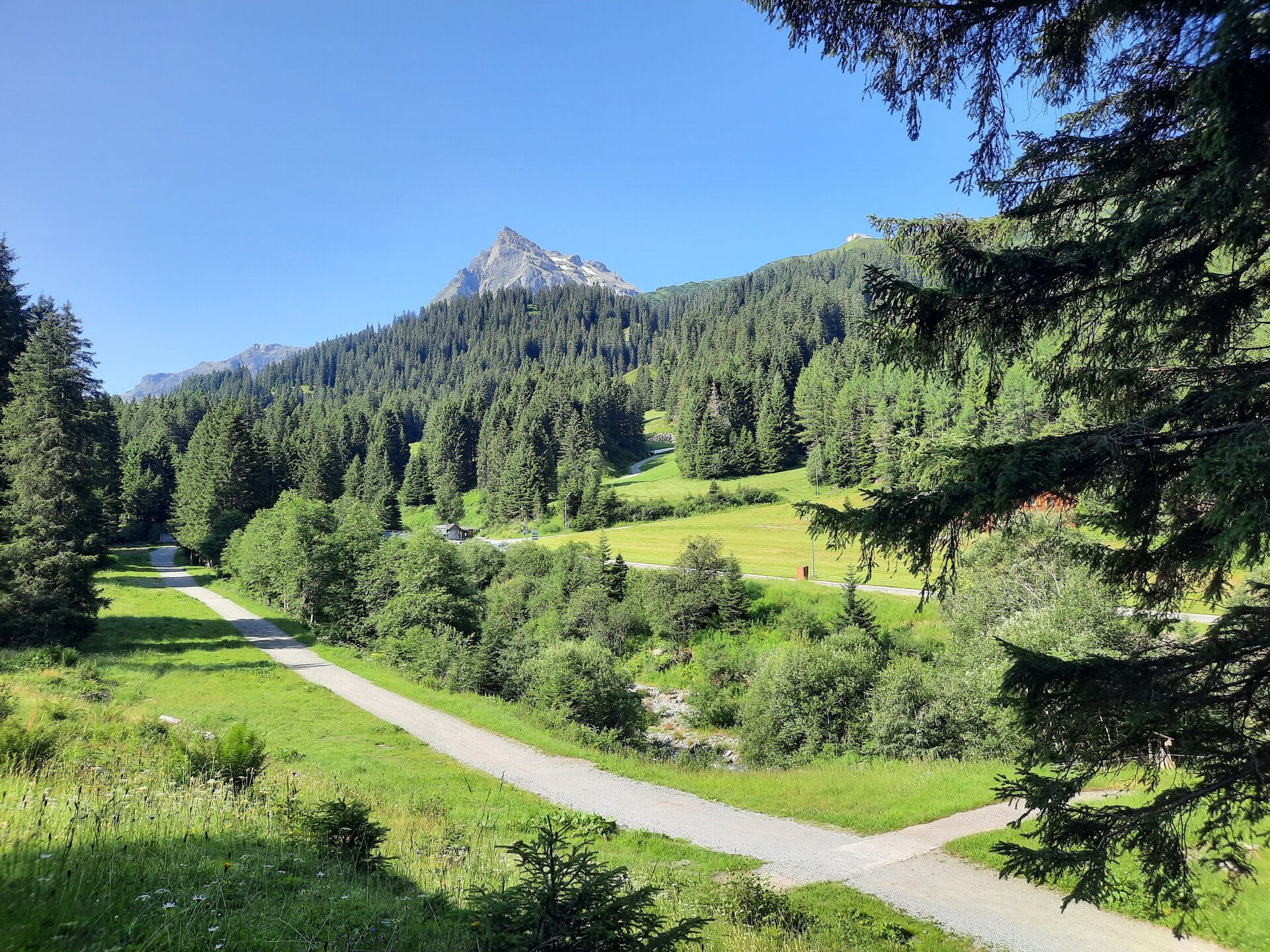
I remember a hike to a small alpine pasture when a little kid in the cozy parlor asked the dairymaid, “Where’s your TV?” The dairymaid pointed to the window with its magnificent view: “That’s our TV.” The child’s eyes widened. Now I have that same look. Because, as it turns out, Gargellen is like a multidimensional panoramic cinema.
The hike starts at the valley station of the mountain railway in Gargellen, the highest mountain village in the Montafon. Our hiking guide Niclas explains right away that this 7.3-km hike with 375 meters of elevation gain—suitable for all ages—is not a tour meant for bragging at the regulars’ table. Rather, it’s about different perspectives. But we should see for ourselves. And so we set off at a leisurely pace, into a forest enchanted with mosses and ferns.
Niclas tells us how, as part of the “Bergdorf 2025” project, a community effort transformed the village’s appearance into something bright and welcoming. As part of this, the village community also built the “Gargellner-Fenster-Weg”as a special tribute to the past and the present. Niclas compares Gargellen to a book: if you were to flip through the pages sideways, you could glimpse into the individual pages—that is, the different eras.
How did a poor mountain village come to prosper back then?
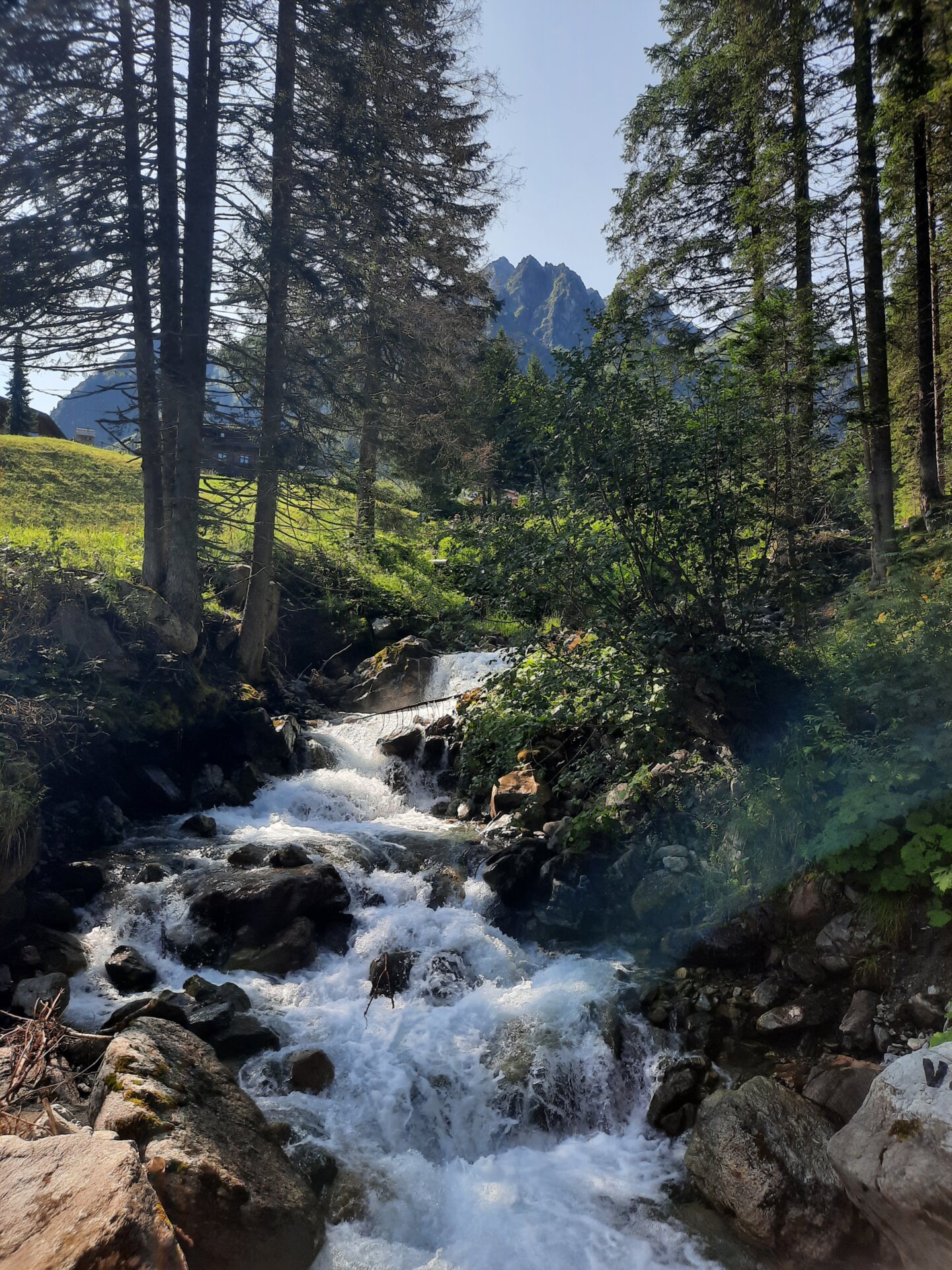
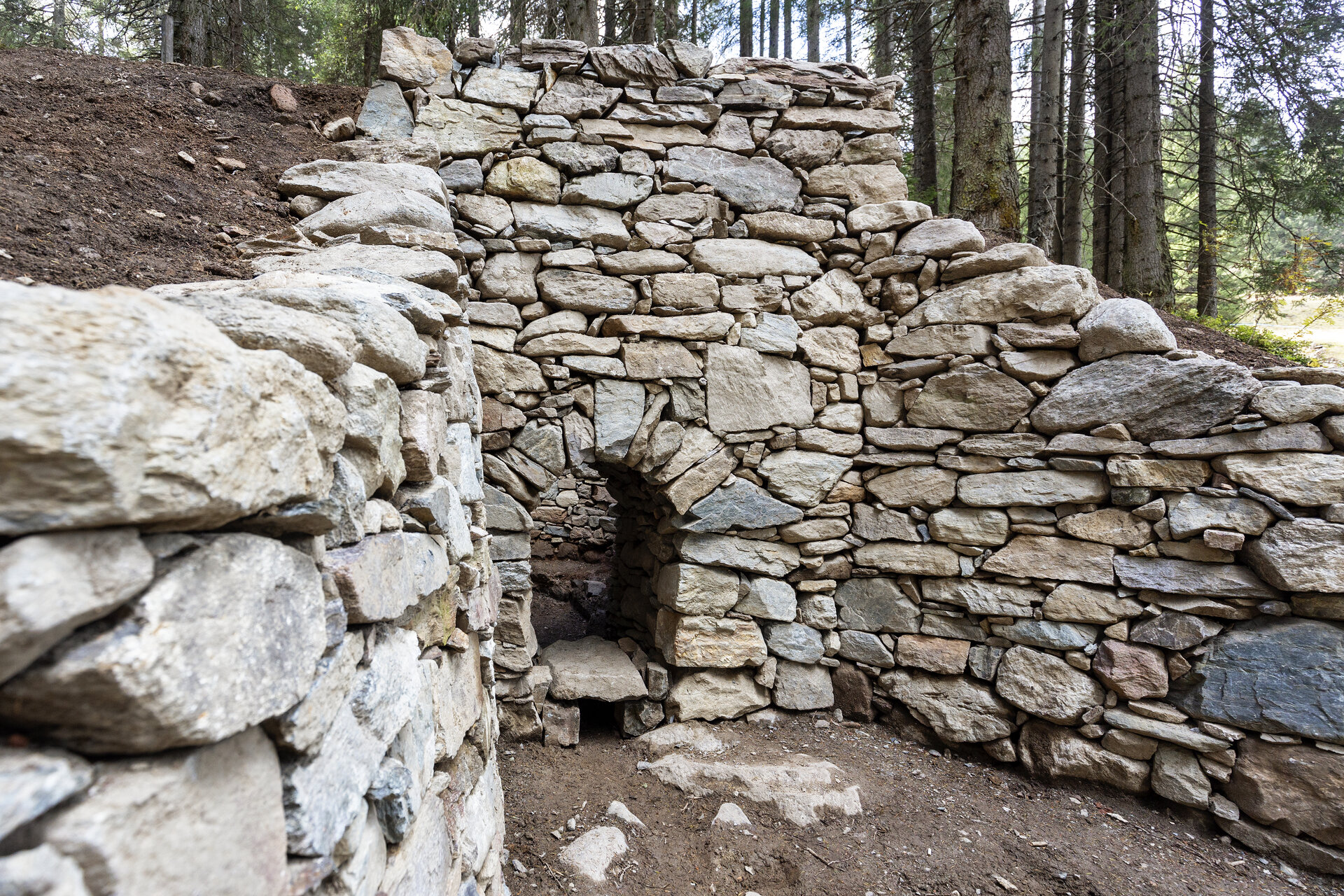
Intrigued, we continue on, crossing the Valzifenzbach stream via a small bridge and arriving at the imposing lime kiln. “There are many artifacts. But this one is special.” Niclas points to the exposed kiln. He himself has helped with its preservation and knows what it means. And all this under the circumstances of that time: Brought to the Alpine region by the Romans, the technique was perfected by local craftsmen. The materials were practically right here on site: primary rock for the kiln’s structure, limestone for lime production, and wood for burning.
The grueling part: Every lime firing at 900°C also shattered the kiln’s stonework, meaning it had to be rebuilt time and again. It was worth it nonetheless: The lime used for construction was a profitable source of income, which is why Gargellen has always held a special position in the Montafon. Work was done “without excavators,” working with nature using stones from mudslides. But also against nature, because due to deforestation for fuel, there was hardly any forest left to be seen here. With the onset of industrialization, lime burning was then discontinued. Phew, because without the forest, one cannot imagine the landscape here with its fauna and flora.
Shaken, not stirred
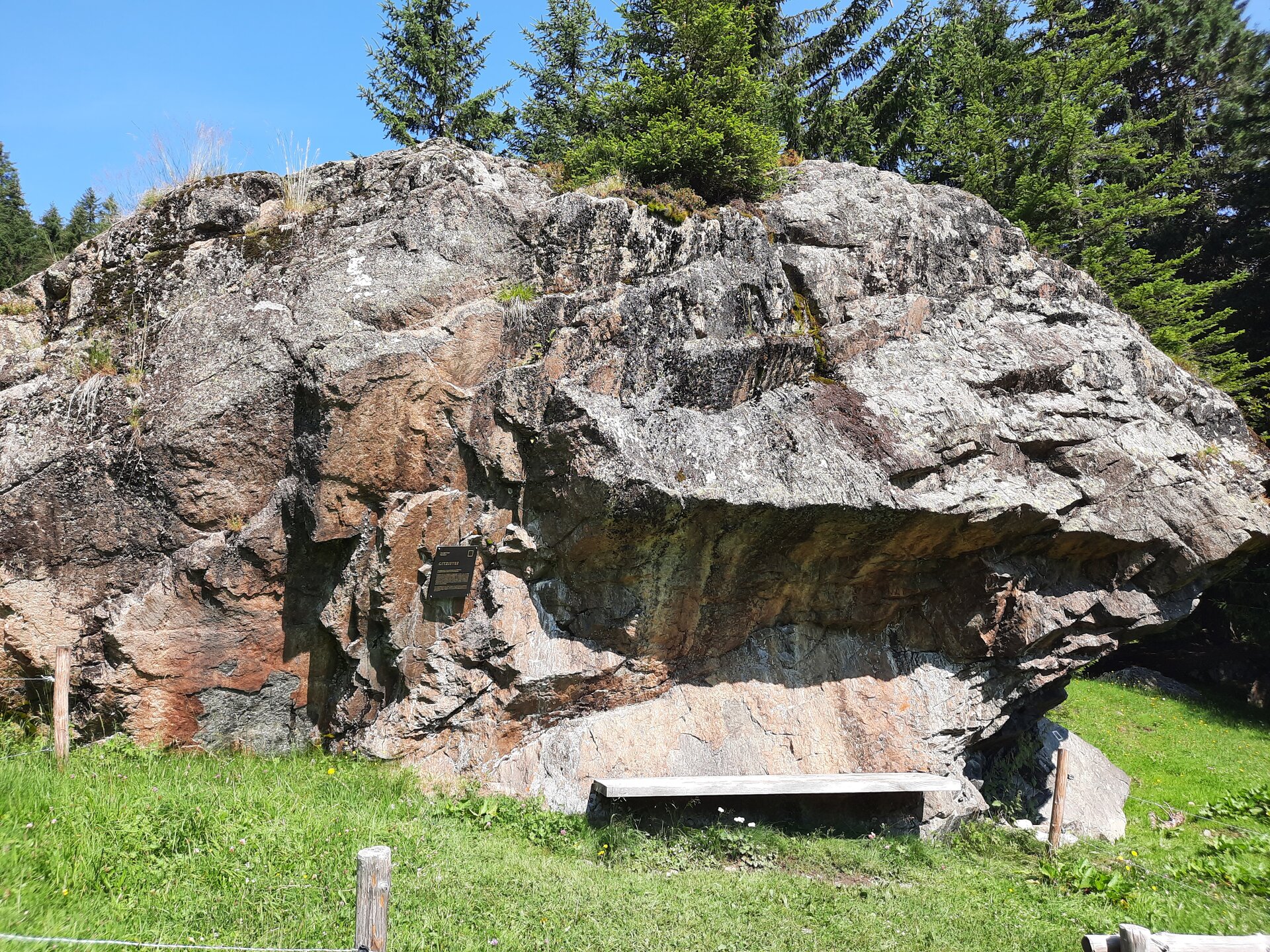
The journey continues along idyllic paths, by the water, across a sprawling flower meadow—and hey, how did you get there? A massive boulder, right in the middle of the meadow, far from the mountains. Niclas solves the mystery: “It’s a glacial erratic from the Ice Age—without which this beautiful plateau wouldn’t even exist.” The boulder is called Gitzistee, a combination of “Gitzi” (goat) and “Stee” (stone), because goats found shelter from the weather beneath it. But so did hunters and gatherers, who, according to archaeological research, had discovered this magical place for themselves.
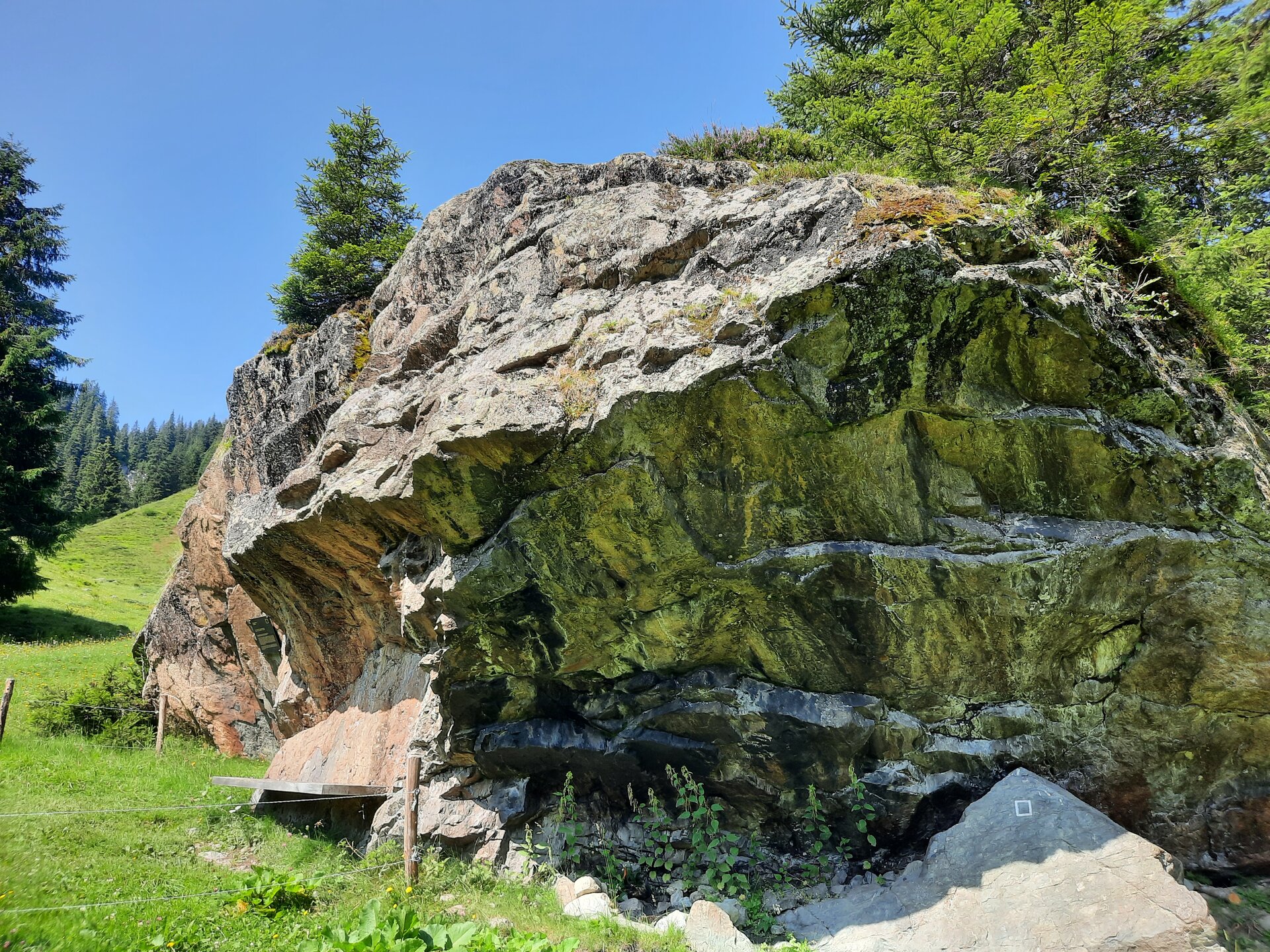
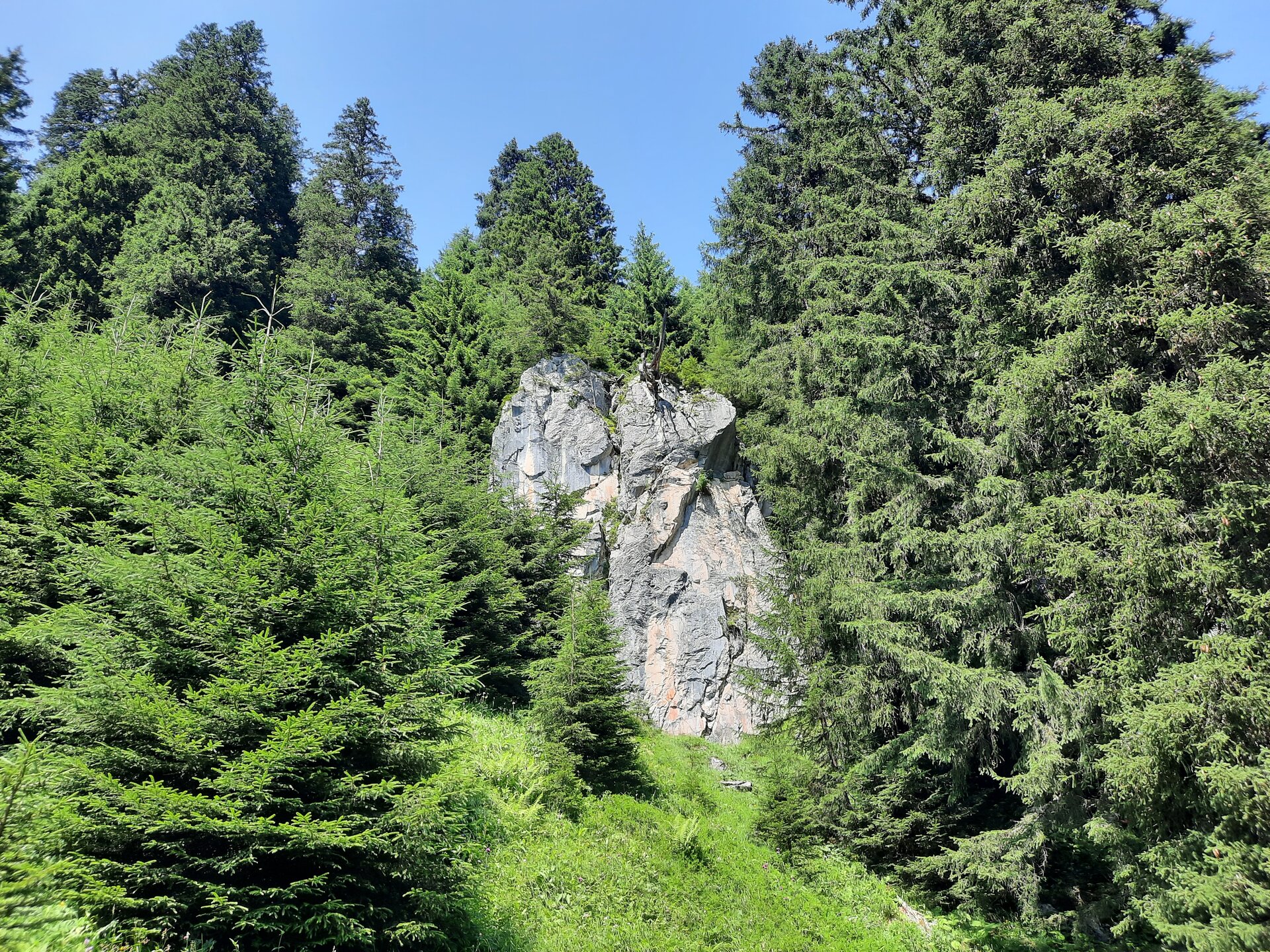
Things are about to get interesting, because we’re standing on a tectonic plate. In geology, “windows” are tectonic lids exposed by movements of the Earth’s crust. That’s why light-colored limestone cliffs are visible here amidst the otherwise somewhat darker primary rock massif, as Niclas vividly explains to us using examples of rolling, thrusting, and compressional movements. We learn how gneiss forms and what happens when it is pushed even further down and mixes with magma. Or what the origin of limestone is and how it changes under pressure.
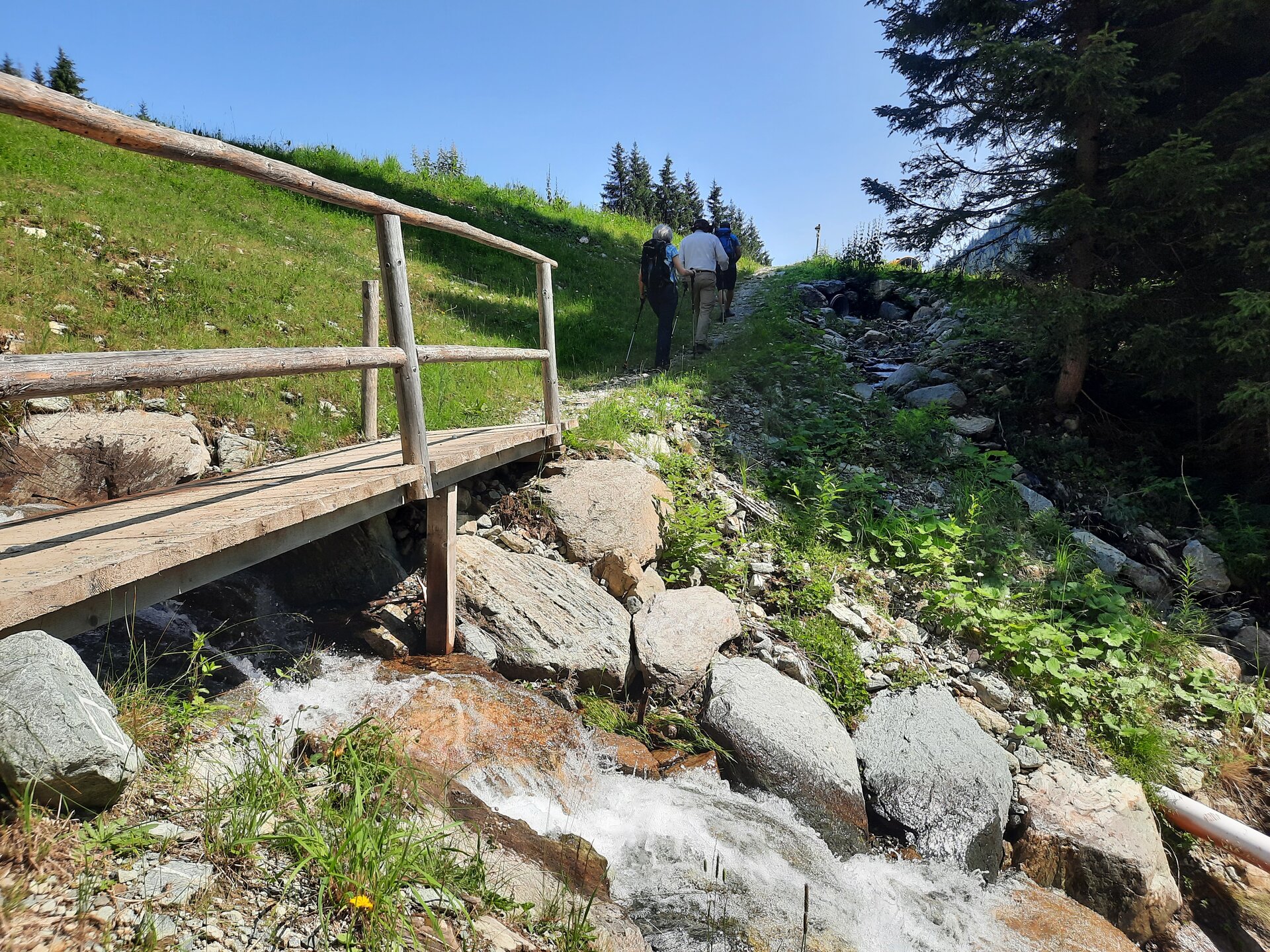
Windows like pictures in a gallery
With so many spiral and rolling movements, it can make one dizzy. We continue on with steady steps and reach the Vergalden Window. From here, you have a view of the Vergalden district, which is slightly warmer due to its location and boasts a particularly diverse flora. Speaking of flora, right now, in July, lush flower meadows line the entire hike, and the blue and yellow monkshood is in full bloom. We arrive at the Gargellner Fenster—it almost feels as though we’re walking through a gallery of framed pictures. We learn a lot about the health resort at the foot of the Madrisa, about the past and the present. For example, how residents and guests once celebrated together there, and how tourism in general has changed significantly.
A Geological Journey Through Time
We encounter the element of water once again; we are not far from the Rongg Gorge, home to Gargellen’s only waterfall, which also features a via ferrata. Crossing the stream, we reach a true natural paradise via narrow hiking trails. Here lies the Maisäß Rüti, and Niclas enlightens us about its history, as well as the Walser movement and Maisäß culture. We can also get a taste of nostalgia right away: the barn, which dates back to 1874, is open to visitors. Walking through beautiful meadows, we reach a spot that opens up the Gargellen Geological Window even further.
What makes this geological window so special is that the processes of folding, thrusting, and compression occurred here within a very small area. This is exactly what makes the Montafon so unique: here, we can hike “on a different tectonic plate” every day. Rätikon, Zimba, and Schesaplana, the mountain ranges toward Lake Constance and the Bregenzerwald—they all have different origins. We listen with fascination, and I’m sure I’ll now see the mountains with new eyes. Not just to be able to distinguish between gneiss, granite, and limestone, but also to better appreciate the flora and fauna. Because every rock has a different pH value and thus creates its very own ecosystem, as we learn from Niclas.
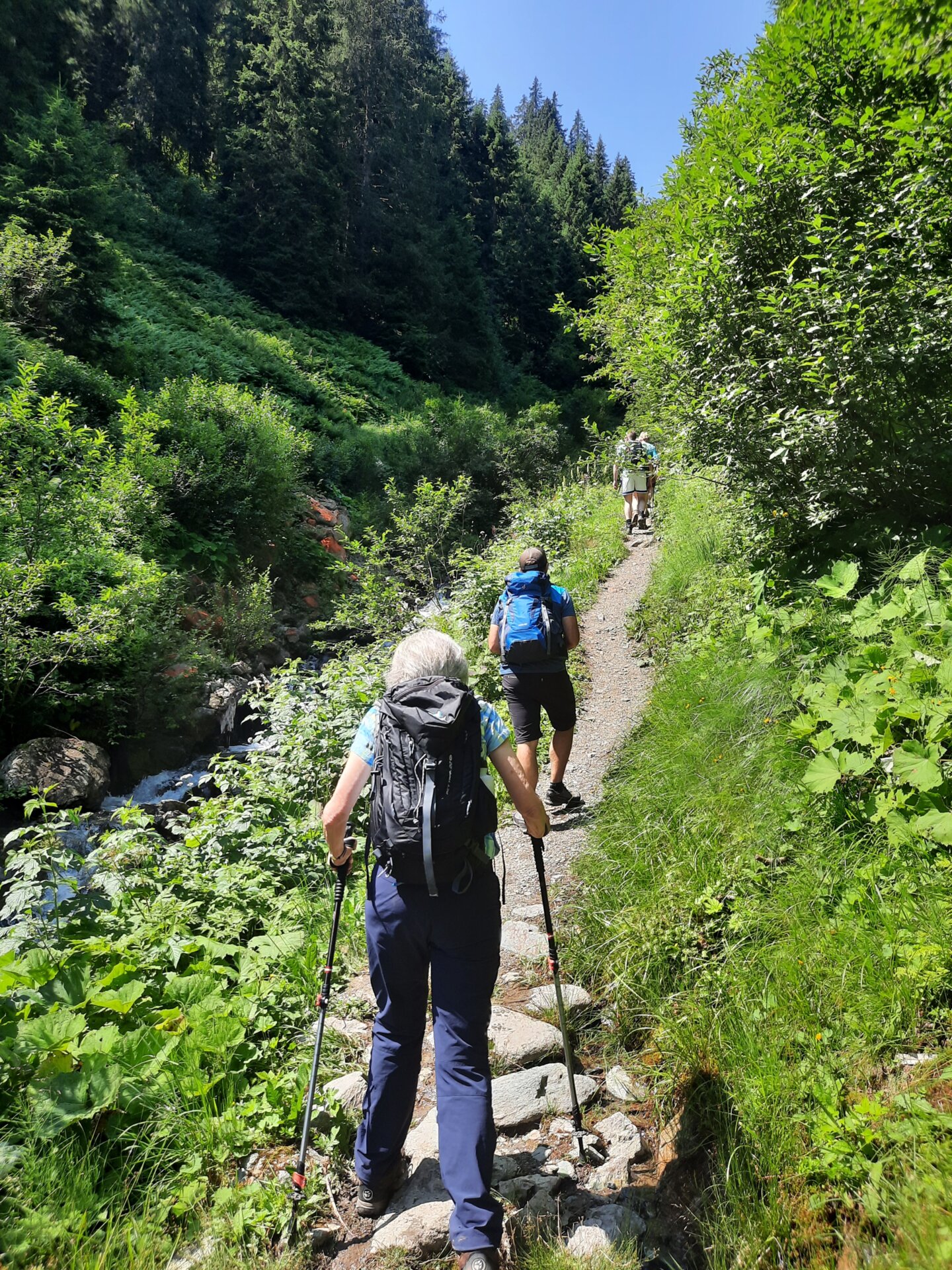
Learning from a variety of perspectives
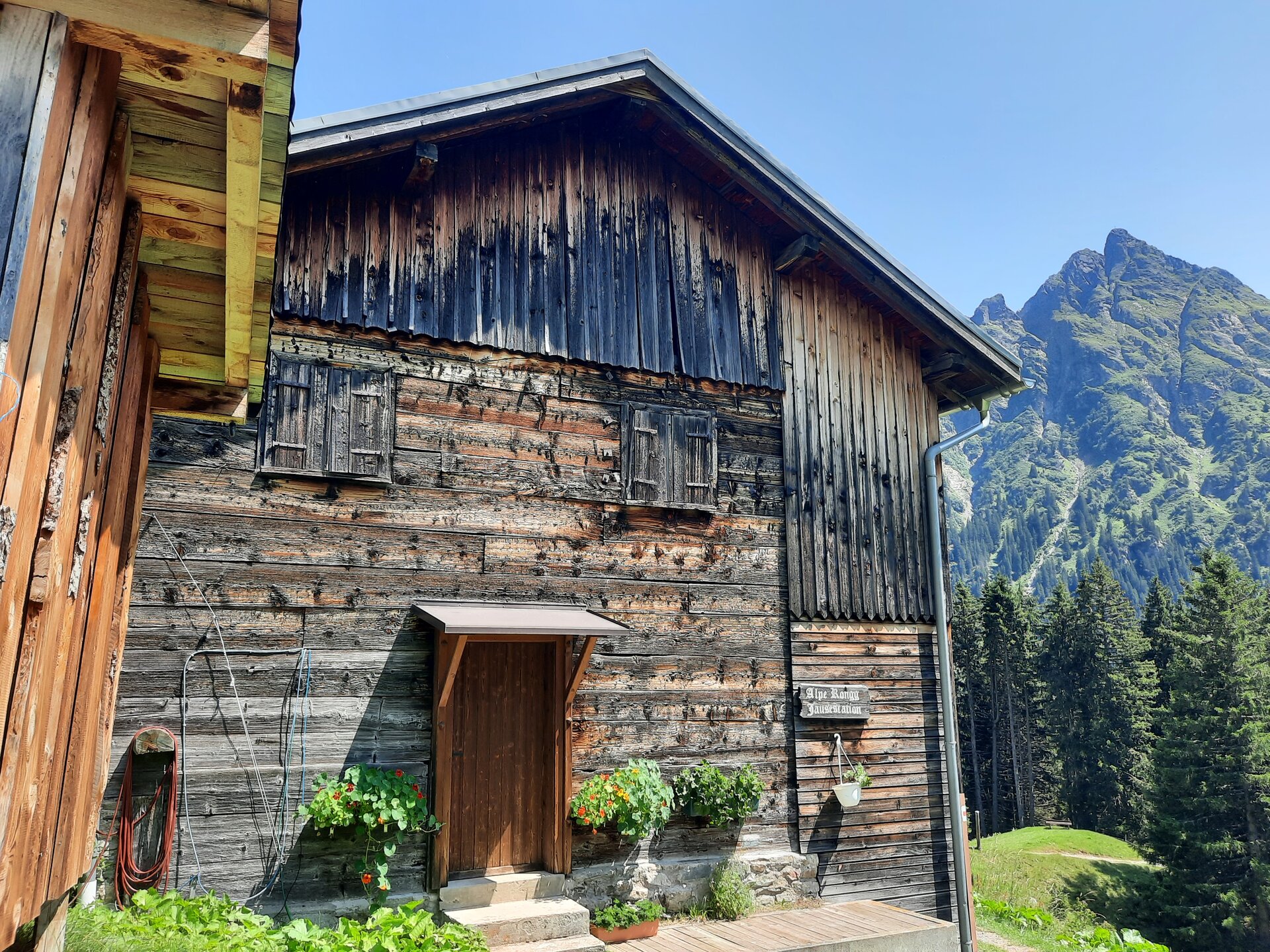
My ideal ecosystem right now would be a bit of water, so we’re delighted when we spot the Ronggalpe mountain hut. About 600 years ago, there was an old mountain settlement here—at 1,600 meters above sea level. Back then, the Walser people were granted land to farm. Today, a cozy inn stands here on the sunny plateau. We are served by a friendly young family and, of course, don’t want to miss out on the regional specialties on offer. The only question is: homemade cake or a lovingly prepared platter of local delicacies?

On our way down, we pass a window of a different kind: an art installation called “Miorama,” consisting of five extra-tall wooden seats with side panels, all arranged in a slightly staggered pattern. We sit down, and unlike with a panoramic view, each of us has a specific section in front of us. Yet it is precisely this focused view that holds something valuable: it’s about perception in the here and now. And everyone has a different view—and perspective. Whether it’s about sustainability, life in a community, or other topics, here you experience a comprehensive way of looking at things. Namely, bringing together different perspectives, discussing them, and finding solutions. Appreciating and making sustainable use of what we have comes to mind here. The multifaceted insights and views—that is exactly what is conveyed at the Miorama station and along the entire Gargellner-Fenster-Weg. The quality of encounters, whether with people or nature, takes on special significance here.
More tours in the Alpenmosaik Montafon


